Until recent years, I would delay writing my “Year in Review” posts until a bit into the new year. The thinking was, I would be done with holiday travel, it would be slow at work, and I would get some space to reflect on the year past.
2022 wasn’t slow or reflective, near its end. Neither was 2023. Then 2024 came and went, perhaps because I was off my routine. Now 2025 is at its end, and it’s time to do something, anything, to put a notch in. It’s not easy, wrapping up all those years (9% of my life thus far!). It can feel unnecessary, this far beyond. But I’m doing it anyways.
In fighting this inertia, I’m faced with the big question: Why am I doing this? For myself, as a writing exercise? For my future self’s recollection? For some researcher, doing a Robert-Caro-depth biography on somebody, hoping I can provide details on this one thing or person I knew in some minor way, because I’m now too inifrm, or dead, to grant an interview? (If that’s you, good luck! Don’t let your subject ruin civil infrastructure for generations to come).
Whatever the reason, it’s time to get it done. Because it’s been nearly four years, I’m not going to detail each of them as much, but I’ll try to hit the major points. Twitter is dead to me now, and I do very little public posting, so no need to summarize that. But, sure, you can still have some pet photos.
- The big thing in 2022
- The big thing in 2023
- 2024 and 2025 (but not specifically)
- Job stuff
- I very much live in D.C. now
- Baking
- Espresso
- Bikes: ridden, fixed, and reviewed
- Repairs (and trauma)
- Raspberry Pi status
- Reading
- Gaming
- Travel
- Pictures of Pets
Hit me up with typos on Bluesky, by email, or by pull request, if that’s your thing.
The big thing in 2022
In the fall of 2022, my wife was getting back into jogging. She felt a pain in her hip, got a scan, and the doctors then wanted more scans. The scans showed cancer, early stages, that needed removing. We wanted to get the surgery done before the holidays, so she could recover during the holiday and new year break. It was supposed to be two, maybe three days in the hospital, then a few weeks of rest at home.
It was many more days than that, in that hospital. My wife’s parents watched our pets and our apartment while my wife was stuck there, and I spent most days with her in that hospital room, other than occasional trips home to shower and nap, or make supply runs to Target.
One day, my wife demanded I go to a nearby bar and watch part of a Bills game, just to get some non-medical-staff social interaction. I had often wondered before about just who shows up alone to watch sports at a bar, and now I have been that person. Be nice to that person, so long as they’re being cool.
It’s difficult to optimally time a cancer surgery, but, dear reader, I beg you: Don’t be in the hospital just before Christmas, if you can avoid it. If you must, make sure you know exactly when the cutoff is for ordering the Christmas dinner. Finding out it was 4 p.m., not 5 p.m., can become a catastrophic psychic blow. The food itself was never going to be all that good, but realizing even that little boon is gone can trigger a kind of last-straw collapse of morale.
While we were stuck in bracelet-and-visitor-badge limbo, and long after we arrived back home, friends and neighbors and family really showed up for us. I will always be grateful to have learned how many people are behind us.
That surgery and experience was a bad cap on 2022, and its after-effects lasted long into 2023. Right up until the next thing.
The big thing in 2023
My wife’s father was diagnosed with throat cancer, a rare mutation of it, in the spring of 2023. This was just after my wife had mostly recovered from her own cancer scare.
One doctor he visited told him to get his affairs in order. A doctor at a well-regarded cancer center said something similar. It took a lot of pushing and outright manipulation to get her father to seek a third opinion, but this doctor knew about an experimental chemotherapy trial for this specific mutation.
My wife, across an entire day’s worth of phone calls and web forms, found the one pharmacy near Albany that could provide these trial drugs. She drove through Northway rush-hour traffic to get there, 10 minutes before it closed that Friday for the weekend. Had she not made it, we’re not certain if he would still be with us, if his throat might have closed up entirely.
Every year of my life delivers some new, treacherous anecdote about how America’s healthcare scheme is not the best or even third-best version it could be. We just can’t get over it, this idea that to help everybody live better, even if they’re not “productive,” would diminish us as a people. I hope someone reads this post someday and it registers as history, not pretense.
Still, the treatment worked, and as I write this, my wife’s father is alive and testing negative for cancer. Before we knew that would be the case, we rented a home in Saratoga Springs for all of May 2023. There was a moment where we thought we might move back to upstate New York permanently, to be close by, but it ended up being just (“just”) one month.
The second-most important thing to know about this month is that it was the best month of my dog Howard’s life. The off-track-season AirBnB was so small that he was always near one of his humans. The couch was tiny and uncomfortable, and he loved occupying it with us. On the rare occasions we had a trip or outing that would have left him alone, his grandparents could watch him.
Most importantly, this house had the kind of fenced-in yard—bigger than the house itself—that my wife and I will probably never own. My wife and I would be working in the house, and he would come right up to us and drop a tennis ball next to our feet. Half the time, we’d take him up on a few fetch tosses. Dogs can be a steadying presence in tumultuous times.
2024 and 2025 (but not specifically)
These years did not have big cancer scares that made us question what was most important in our lives. Nice not to have a framing device, really. So I shall provide updates in broad categories, rather than run through the years themselves.
Job stuff
Or, the Major Thing that Came Up in March 2022, as Alluded To in the Introduction of the 2021 Review, and then the Other Major Things After It.
I changed jobs four times in the last four years. Twice or maybe twice-and-a-half times of my own volition, once on a fast pivot.
I left iFixit after 3 years’ time. I’ve summarized and linked my iFixit work in previous posts here, and friends and close family and coworkers there have heard tons from me about that work. It changed how I view the world, especially the things we buy and use, and it gave me my first glimpse outside of my mostly report-and-write career. I still believe it’s a near-universal good to read the manual, to better understand how your things are made and what that costs, and to ask why things cannot be fixed and made more fixable.
Leaving iFixit, I joined a one-person startup to make it two. Carbon Switch aimed to be a deeply researched and eco-conscious buying guide for people looking at renewable home energy. Heat pumps, induction stoves, community solar, things of that nature. Clean home energy and apliances was, in March 2022, a booming thing that seemed like the way forward (greetings from 2025!)
I joined, I sprinted for weeks to learn and write as much as I could. Then the bottom fell out of the online advertising sector, Google made one of its casually brutal SEO shifts that wallop a whole bunch of sites’ traffic, and what was planned as a slow-growth project suddenly felt like it was headed some unknown somewhere, fast.
During the resulting flux, I landed a job at Ars Technica. It was fun, challenging, weird, and nostalgic, writing in a “traditional news blog” style. Ars has a devoted “direct” audience, meaning people who visit the site directly, read articles about a few different topics, and often comment on them. This audience would call me out if I, for example, incorrectly cite a year when real-time strategy games largely transitioned into multiplayer online battle arenas (MOBAs), or make an off-hand anecdote about the speed of sound that contains a physics falsehood. But they would also reward you for a good line or two, and engage on topics too niche for most other sites.
And then, as of June 2025: Tailscale. That’s where I work now. I write for their blog, I help other employees write for their blog, and I pitch in words and thoughts and even some tech and media opinions wherever else I can. It’s more directly marketing and product-related than the writing I did at iFixit, but it’s quite different from almost every other job I’ve had since college. I’m enjoying the challenge.
I very much live in D.C. now
Since the big move to D.C. in 2020, I have moved twice. Once to a different apartment in southeast (“Hill East”) D.C., then into a house in northeast D.C.
My new house is much, much newer than my last house in Buffalo—like 140 years newer. But then almost all of the housing in the United States is newer than that Buffalo house. There are evenly placed studs, evenly applied insulation in the walls and windows, and enough electrical circuits that a hair dryer or printer warm-up doesn’t cause every light in the house to flicker. There are ethernet jacks in every major living and sitting room. I am absolutely spoiled, and I try to remember that when something irksome happens.
I have lived in D.C. five years, as of early September 2025. Longer than a fluke or a diversion. Can I say what it’s like here, now? Maybe. I’m still getting a handle on it. (Right now-now, during a period of federal intrusion into nearly every aspect of life and work in D.C., is, I hope, a statistical aberration).
It’s hard to make local friends when you work remote, in a city with so many people living here primarily for their career. You gotta be explicit about your friend-making efforts—straight-up telling dudes you just met that you want their phone number, because you’re eager to make friends. It feels terrifyingly direct, but it’s entirely necessary, because it’s too easy to escape any meaningful attempt at sincerity by just staring at your phone.
That’s true anywhere, right? Right. It helps that D.C. is a quick train ride or road trip to New York or Philadelphia, and, if necessary, a flight to pretty much anywhere, usually direct. I can keep up the relationships I have, and it’s not a huge effort to try, say, a weekend excursion to a board game conference, or host a remote game night. The relatively warmer weather has kept a casual bike-ride group I’m part of riding through much of the year. And there’s a lot of bar trivia in this town, which I intend to utilize further in the near future.
Here’s what I do have, as regards to D.C. resident cred:
- Opinions about biking and driving routes to most places
- Custom travel itineraries for guests who visit
- Mental rankings of the restaurants in the northeast, southeast, and southwest sectors (NW? I dunno, pick one of a thousand places)
- Museum picks and secrets
- A firm belief that it’s absolute bullshit that D.C. is not a state
Perhaps it’s the smaller stuff that really means you live somewhere, maybe even more than, say, owning the deed for land that contains your primary domicile. I wake up and check the Capital Weather Gang and local newsletters (The 51st, in particular). I listen to Citycast DC while making coffee. I take the Metro to places where driving would be easier, and bike places that are not as efficient, just to expanded my mental bike map and engage with lesser-seen parts of the city.
During the winter of 2024, my wife and I met a family friend for a Wizards (NBA) game downtown. The beers were $18. The owner of the Wizards and Capitals was in the middle of a fever dream idea to move the team to northern Virginia, and we both mocked and lamented it. We took the subway and bus home. It was unseasonably cold for DC winter (down to the high 30s!), but still just light jacket season for us. We asked our dog if he could remember what February was like in Buffalo. He did not respond.
Feels like we live here, is what I’m saying.
Baking
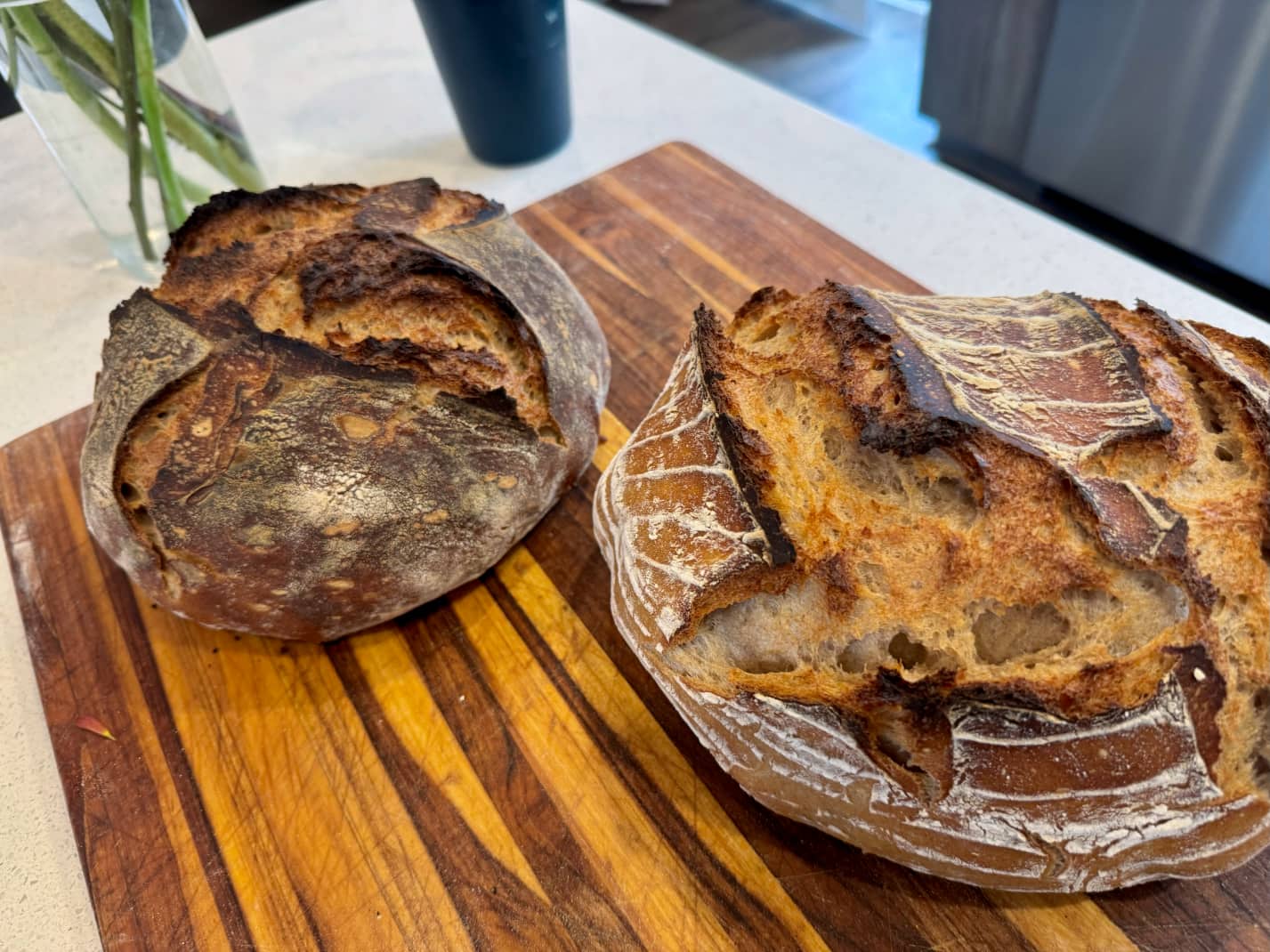
Besides the occasional granola, cookies, and rare cakes or pies, the most notable thing I worked on baking in the last three years has been bread. When we lived in Southeast D.C., it didn’t feel necessary to turn out great bread, because we were so close to Capitol Jill. But where we live now is a whole different thing, bread-wise. Also, I like messing with stuff.
I had previously messed around with no-knead bread without much success, then Cook’s Illustrated’s “Almost-No-Knead Bread,” which was better, though I still sometimes got a slightly raised disc of chewy whipped flour. At some point in 2023, I discovered that J. Kenji López-Alt had crafted a lengthy feature article (free Times link there), along with recipes for free-standing and sandwich bread, that offered a third way: Low-Knead.
Instead of doing nothing with the dough after combining ingredients, or just a few minutes of actual kneading, this had you coming back to the dough every so often to do a “stretch and fold.” I was familiar with this technique from another killer low-effort recipe, King Arthur Flour’s Crispy Cheesy Pan Pizza. Like that pizza, too, López-Alt’s Low-Knead places the initial (“bulk”) rise in the fridge, which takes the pressure off timing and guards against over-fermentation. After watching López-Alt make it in GoPro-powered first-person POV, I tried it, and then tried it again, and each time turned out pretty-good-to-great bread.
While on vacation with a group of friends, one of them decided to bring along their starter and all their bread gear, and every single day turned out at least one loaf of sourdough bread. I had somehow avoided sourdough during its pandemic revival. I remembered a respected baker in Buffalo expounding on Twitter, during that COVID-era yeast shortage, about why sourdough was a pain in the butt for people who do not own bakeries. It took more time and had uneven timings, there was flour waste in keeping it fed, and live cultures were fickle. I can appreciate it when a trusted professional tells me not to bother with something, even if I don’t always follow that advice.
That daily supply of fresh vacation sourdough got to me, though, with its tangy flavor, beautiful look, and consistent shape. The friend was happy to give me both a freshly fed starter and a Google Docs recipe. I kept the starter alive for a few weeks, then I fed, combined, stretched and folded, bulk fermented, shaped, proved, baked, and … disc. I tried it again and again, eventually getting a slightly puffier disc, one where you could maybe get a morning toast, if you sliced it diagonally.
I wrote about my sourdough experience, and breakthrough, at Ars Technica. Spoiler: much like Literally Every Other Hobby I’ve Ever Taken On, a big part of the solution involved a change in assumptions, a shift in understanding, and patience.
Espresso

I’ll try to keep this short, because you’ve already just made it through one lengthy description of a guy-without-kids hobby. But at some point in early 2023, I bought an espresso machine. I had researched, I had made a spreadsheet (Wirecutter habits are sticky), and I had gotten the counter space dispensation from my wife. I walked up the steps of the Capitol Hill rowhouse of the Facebook Marketplace seller, run the doorbell, and asked the guy which machine he was upgrading to, after selling this one. He smiled, and said it was a Linea Micra.
I have a Breville Bambino Plus, paired with a Baratza Encore ESP, so that I don’t need two different grinders for drip (regular) coffee and espresso. I spent a long time learning how to “dial in” espresso. It’s taken even longer to get halfway decent at steaming milk. With the help of r/espresso, James Hoffman and Lance Hendrick and Morgan Eckroth on YouTube, and a class at Vigilante Coffee in Hyattsville, I can reliably pull shots of Lost Sock’s Two Steps blend, and do a pretty good tree, flower, tulip, or monk’s cowl.
Bikes: ridden, fixed, and reviewed
As part of my gig at Ars Technica, I got to review e-bikes. My niches were non-aero, non-mountain, “city”-minded bikes. I wrote up a fixed-gear belt-drive semi-self-built oddity, a beautiful e-bike that barely looks like one, and my long journey with Swytch DIY e-bike conversion kits. It was a good gig, even if it can be torture to trim down the 500 thoughts you have about any given bike.
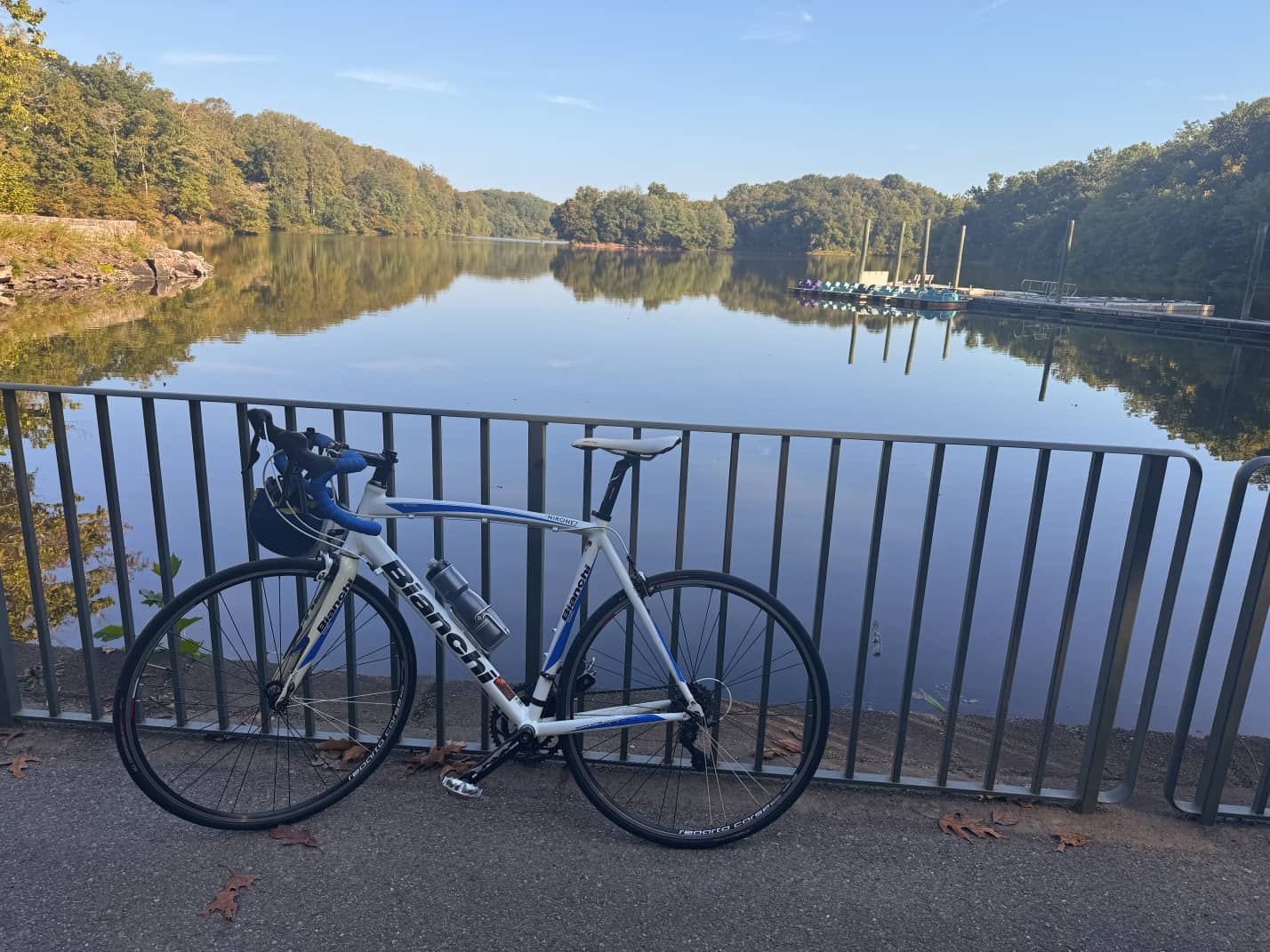
After years of apartment living and mostly recreational or errand-based riding, I have a drop-bar road bike, my first since leaving Buffalo. It’s a Bianchi, aluminum with a carbon fork. It feels incredibly light compared to my rugged hybrid with the DIY e-bike wheel. The pedals have clips on one side, and I have bought clip shoes. I have fought so long not to become this bike person, but the pull is too strong. You will (almost) never see a picture of me in Lycra on this blog, but just know that it’s happening.
The best bike thing I’ve done in the last two years is join The Bike House, a volunteer-run bike repair clinic. You show up, you get the tools out from the hardware shop that graciously stores them, and you teach people how to fix their bikes for a few hours. People donate if they can. It’s remarkable how simple something like this can be.
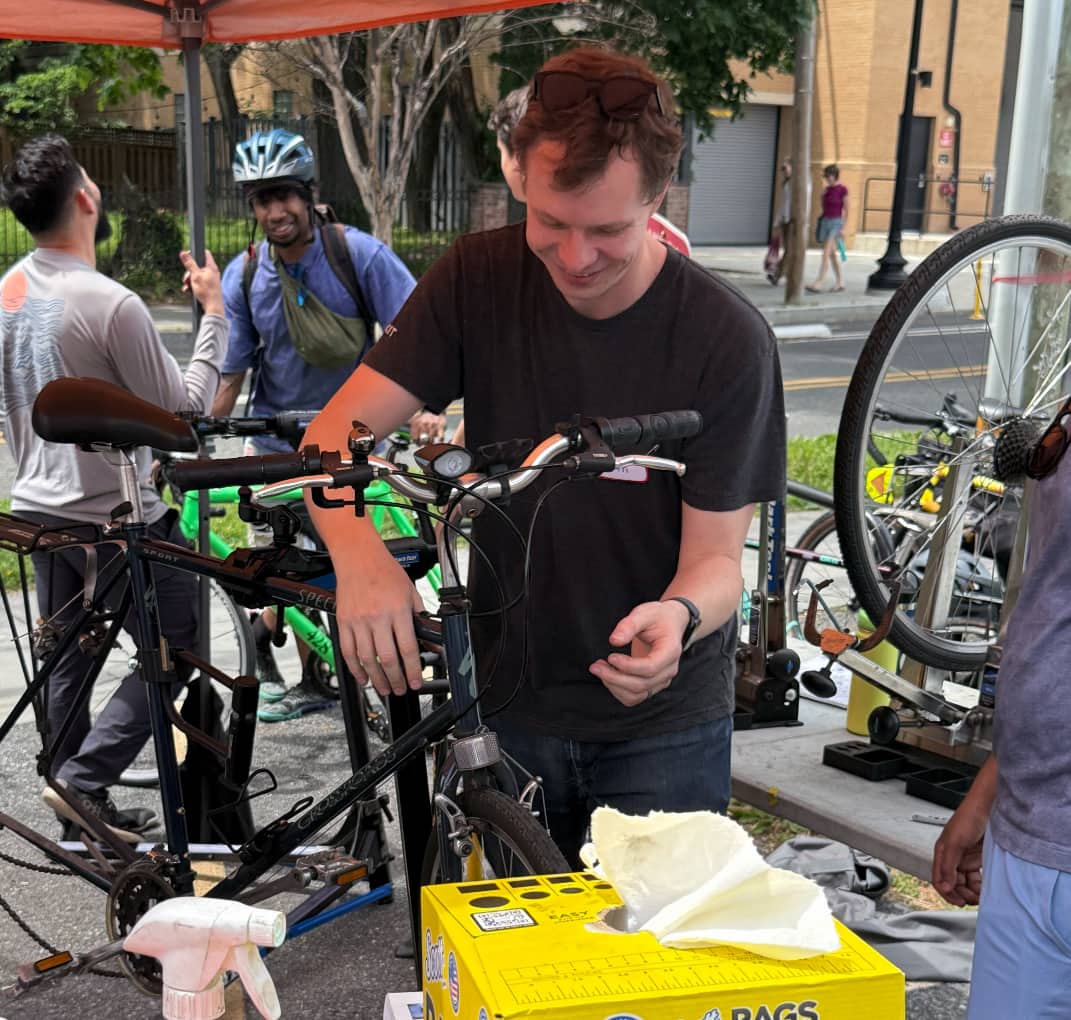
Helping at the Brookland Bike House clinic has brought me face to face with imposter syndrome. If I don’t know how to do something, I have to just say that, instead of watching a YouTube video in the corner or speed-reading Sheldon Brown’s site. But I do know how to do a lot of bike things, and I’m getting pretty good at explaining them in a way that helps people understand not just want is wrong, but why, and how you might fix it in the future.
My big thing is truing wheels. I legitimately love truing a wheel. I dove head-first into wheel building and truing when I rebuilt my Schwinn bike from the ground up, and it stuck. I haven’t done meditative practice or much zen reading in what has to be a decade. But walking people through tightening, loosening, checking, balancing, dishing, and, crucially, knowing when it’s time to stop and let go? It feels like I’m back on the mat again.
Repairs (and trauma)
Before I get to the big, awful repair I had to make:
- I got my Encore Baratza grinder working again, after its motor was repeatedly getting stuck.
- I disassembled and repurposed a Framework laptop into a “slabtop”
- I’ve made a number of smart-home-ish “fixes” to my current home; topic for another year, maybe. My favorite was the weird water heater journey.
Alright, let’s get into it. My second D.C. apartment came with a parking space. It was one spot in an open-air gravel pit that faced a two-car roll-up garage door. This is a strange but common thing in D.C. because of various zoning laws and alley realities. The door had a commercial-grade controller, and an infrared safety sensor that frequently got misaligned. If the door wouldn’t open, the fix was usually just nudging the beam projector a little, until it hit the reflector on the other side, and the safety sensor’s LED turned from red to blue.
One day the garage door wouldn’t work, either open or close, and there was no light at all on the beam or its receiver. I decided to open up the stamped-metal weather box that contained the controller and see what was going on in there. I took a couple screws off and noticed a lot of dirt (dirt?) in the box, so I brought a garbage tote over to catch it. When I finished opening the box, an abandoned bird’s nest fell into the bin. That’s strange! Probably won’t come up again.
I then tried to reset the opener, but because I had blocked the sensor for a few minutes with the garbage tote, it entered a fail state, and I needed to do some kind of deeper reset on the system. My friend Nick was visiting at the time, and we essentially read the entire 128-page garage manual PDF together, on our phones, in the driveway, until we could reset the fault codes and safety systems. Eventually, I realized that the beam mount was never going to stay in place, so I jammed a bicycle reflector directly in front of the beam, so that it always thought its path was clear. Entirely unsafe, but at least my neighbor and I could open the garage door after a windy day.
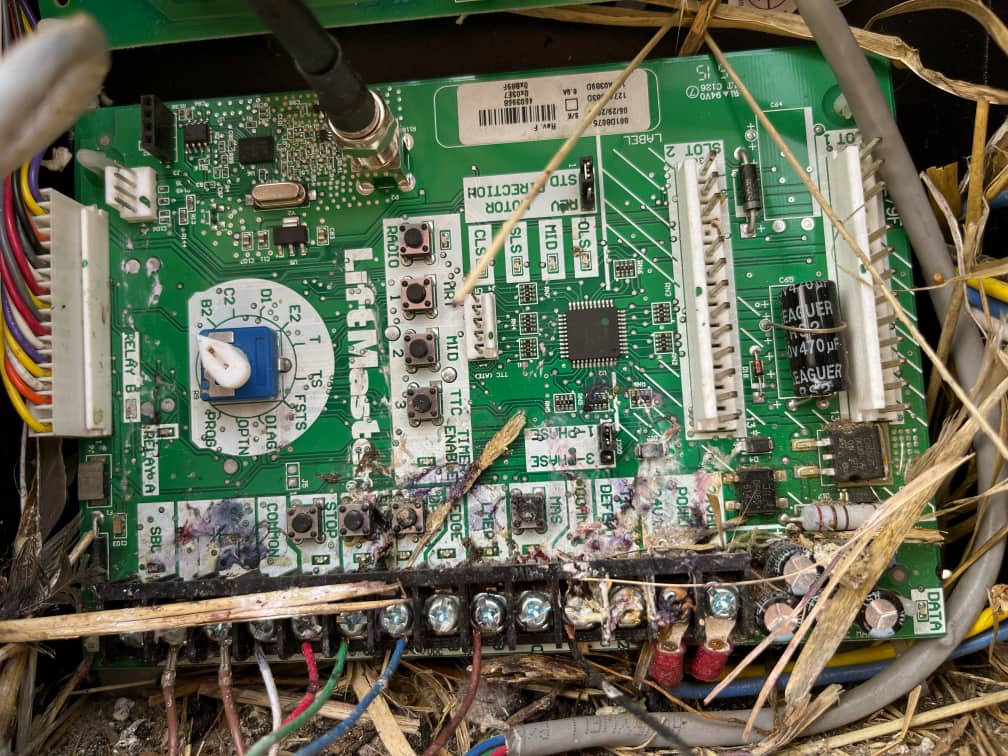 That was Act 1, the inciting incident, of the garage story. One lesson drilled into me from this ordeal is that if you see an abandoned bird’s nest somewhere, there may eventually be a future bird’s nest there. The next time I had to open the box, the door wasn’t working at all. That was because birds had created a new nest in there. A bird mother, seeking warmth, managed to get inside the weather box, then pry loose a single screw protecting the circuit board innards. The birds enjoyed the warmth of capacitors and voltage converters, up until their movements and various detritus destroyed the board.
And there were still baby birds in that garage opener box, when I discovered this.
A neighbor and I tried our best to transport the chicks to a safe place nearby, where their mother might reasonably find them, but I have no idea if that helped anything. I wasn’t the person who left way too big an opening for birds right next to electronics and moving chains. But displacing smooth-skinned chicks to make sure my car can get out felt awful. Normally I feel great after mastering an entirely new machine scheme and improving some aspect of it, but not this time.
Maybe this is just the urban version of running over a rabbit warren with your lawnmower. I don’t recommend either version.
Raspberry Pi status
We are at four Pis, folks. These little guys are:
- A Pi Zero 2W, hooked up to a Brother laser printer to provide better networking, phone printing, and remote access.
- A Pi 4, in the midst of a very long transformation into a hopefully helpful desk gadget (separate post, coming soon?)
- A Pi 3b, formerly a game emulation console and Pi-Hole server, soon to be shipped to my mom’s house to provide remote network access and occasional VPN endpoints.
- A Pi 4, obtained for work purposes (I swear!), currently providing a tiny test space for Docker containers and orchestration. Might have another job soon.
The first Pi 4 was retired as my Home Assistant server, mostly due to greater demand for performance (including some very light local AI model stuff), though also concerns about microSD card burn-out. Home Assistant now lives on a tiny HP “thin client” box that probably used to schedule appointments at a dentist’s office or something. It’s snappy, and it gives the most important app some breathing space.
Perhaps, by this point, you can see why I might have ended up at Tailscale.
Reading
Almost certain to miss something in recapping four years of books, but here goes.
Notably, over the past few years, my wife has requested that I stop reading non-ficiton in bed, because I can stay up far too late with a good topic. So there’s this gradual shift happening, where I sneak in my very long, incredibly detailed histories of arcane topics in audiobook form, during dog walks and dishwashing. It takes me longer to read fiction, as I fall asleep easily reading it. Friends tell me this is the reverse of almost everyone’s experience, and I truly have a hard time explaining it.
I recommend borrowing these from your library, in-person or through the Libby app, or buying from your local bookstore, or registering your local bookstore with Bookshop.org and buying there. Bookshop dot org also has DRM-free ebooks.
- Bullshit Jobs, David Graeber. Of all the books I read about the modern workplace, this one stuck the most. Helps that it does not overstay its welcome.
- The Path to Power, Robert A. Caro. This was essentially my bedside book for all of 2022. Unsurprisingly great.
- Newsroom Confidential, Margaret Sullivan. For one brief period, my boss’ boss, and now one of the most prominent chroniclers of what is actually happening at regional newsrooms, the former backbone of truth in everyday life.
- Titanium Noir, Nick Harkaway. I read three of this man’s books before I realized who his father was. This was my favorite, but they’re all good reads that take just about 1/3 the length to really set their hooks.
- Beowulf: A New Translation, Maria Dahvana Headley. I don’t own a tweed jacket, but I have now read three translations of Beowulf (Heaney, Tolkien, Headley). And I would read them again.
- Among the Bros, Max Marshall. A fast-moving, freewheeling yarn about something you had no idea was going on in South Carolina.
- Wool, Hugh Howey. The Apple TV version is Silo, and it has, of course, less worldbuilding and characterization. But I’ve enjoyed both.
- Joyful Recollections of Trauma, Paul Scheer. Highly recommend the audiobook, which Scheer reads, and which has extra bits.
- The Perfectionists, Simon Winchester. This book kept me riveted (pun?) for days on end, and was also pure melatonin for my wife on a road trip.
- Cults Like Us, Jane Borden. Dragged a bit in the last third for me, but it revealed a lot about the Puritan/American/expansionist mythos that explains why we’re like this.
- Playing Dead, Elizabeth Greenwood. It meanders a bit, feeling like a journalistic fishing expedition. But wonderful human stories about a topic that has always fascinated me.
- The Bright Sword, Lev Grossman. My favorite book of 2025. Who could have guessed I would love an even-more-magically-real take on Camelot? (everybody, everybody could guess)
- Play Nice: The Rise, Fall, and Future Of Blizzard Entertainment, Jason Schreier. The whole story, the whole way through, or as close as we’ll likely ever get.
- Dune, Frank Herbert. Felt like it was finally time to read it. And, yep, I read it. One of those books that was really formative, but that doesn’t make it an easy read, decades later.
- Alright, Alright, Alright: The Oral History of Richard Linklater’s Dazed and Confused, Melissa Maerz. One of my top 10 movies, and I just devoured this.
- Thank You (Falettinme Be Mice Elf Agin): A Memoir, Sly Stone with Ben Greenman. Sly Stone is an unreliable narrator of his own epic journey. Questlove’s documentary (Sly Lives!) is more revealing and insightful. But this memoir is entertaining, it has weird snippets of history, and the man’s signature wordplay. Also, he really loved cars, and that definitely comes through.
On Sly Stone
I dreamed of writing a Sly Stone biography, a “definitive” one, with something new and revealing to say, pretty much my whole adult life. No kidding—I have Google Drive folders with assorted hard-to-find articles and interviews about the man, his band, and especially the There’s a Riot Goin’ On era. With Sly’s death, and the two major works about him out in 2025 that are still riddled with open questions and inconsistencies and long periods of foggy unknowns, I’ve made peace with how this was probably an impossible task.
I would imagine that most writers and reporters can relate to taking it as a challenge, almost an affront, when someone seems to go to great lengths to prevent deep knowledge of them from existing in the world. The very good Kill ‘Em and Leave tackles this. James McBride pulls out as much as anyone can about another musical and cultural force who was black, popular, complicated, and confronting both personal and societal demons. “He didn’t want you to know him,” says the person closest to James Brown who wasn’t related to him (and he made his adult children schedule appointments to see him).
It’s probably just as well that a white guy from upstate New York didn’t actually set out to discover the fundamental truth about why Sly “disappeared” or what “happened” to him after his high period. These are just about the best answers we’re going to get, especially at his generation’s age, from folks providing more nuance than I ever could. It has been strangely freeing to let go of this quirky idea, even if I’ll never stop being interested in the topic.
Gaming
I reviewed some games for Ars Technica during my time there. It was a mixed blessing. It could be absurdly fun to write about games, professionally, something I had long hoped to do. But it could also take the personal and the exploratory out of gaming, rushing to pack in enough of a 40-hour game to have enough of a sense of it for review (or even just “impressions”).
Here’s the highlights of what I played over the last four years. Almost all of it is on PC. Once the Steam Deck landed in my hands, the Nintendo Switch became what could be the last console I’ll own. We’ve had a great run, constrained marketplaces, but I’m reverting to form.
- Elden Ring. My favorite game of the last few years. I played more Satisfactory, but it didn’t leave the same kind of brain indent as this game. My first Souls-affiliated game, maybe my last, and I got lost in it like few other games since the way-back Zelda titles. Think that was the point!
- Satisfactory. I’m at 300 hours and I could do it again. I played at first for just a few hours to review it. Then I came back and made it nearly my whole 2025 in gaming. Explore, build, rebuild, optimize, obsess.
- Baldur’s Gate 3. Everybody is right about this game.
- Cyberpunk 2077. A big disappointment to me, playing it when it first came out, but the studio that made The Witcher 3 could not help but turn it around. Idris Elba in the DLC goes a long way to help that.
- Marvel’s Midnight Suns. Weird friendship-is-magic X-COM deckbuilder that was fun while I was playing it, and that I keep thinking I will replay at some point. It’s a lot of dialogue, if you’ve already heard it, is the barrier.
- Fights in Tight Spaces and Knights in Tight Spaces. Games that found me via Steam’s discovery queue, and I deeply enjoyed each of them for about 10 hours each.
- Sunderfolk. Playing this with my friends, online, session by session, was a wonderful treat. Just enough game to allow for talking and bonding, but not too much.
- Deep Rock Galactic (and the Survivor spin-off): Similar to Sunderfolk, a delightful shoot-and-shoot-the-breeze trip. The Survivor-alike is far better than it has any right to be.
- Tactical Breach Wizards. Because I was, technically, a GAME REVIEWER for a bit there, I can say that this game was the most underrated title I played. Except by me, because I loved it and said so.
Travel
I’m lucky to have gotten to these places throughout 2022-2025:
- Key West (our passports expired during COVID and we still wanted to go somewhere Caribbean-ish)
- Berkeley Springs, W. Va. (cabin getaway)
- Provincetown, Mass. (wedding)
- Asheville, N.C. (friend trip)
- Denver, Colo. (three times, three weddings)
- Philadelphia (PAX convention)
- Chincoteague Island (cabin getaway)
- Las Vegas (Killers anniversary show at Caesars Palace)
- New Orleans
- Chicago (Oasis show, on behalf of my lovely wife)
- Toronto (work trip)
- Cancun (work trip, somehow)
- A few times each: Naples, Nashville, Buffalo (once for the generational eclipse, Outer Banks, and New York City.
Pictures of pets
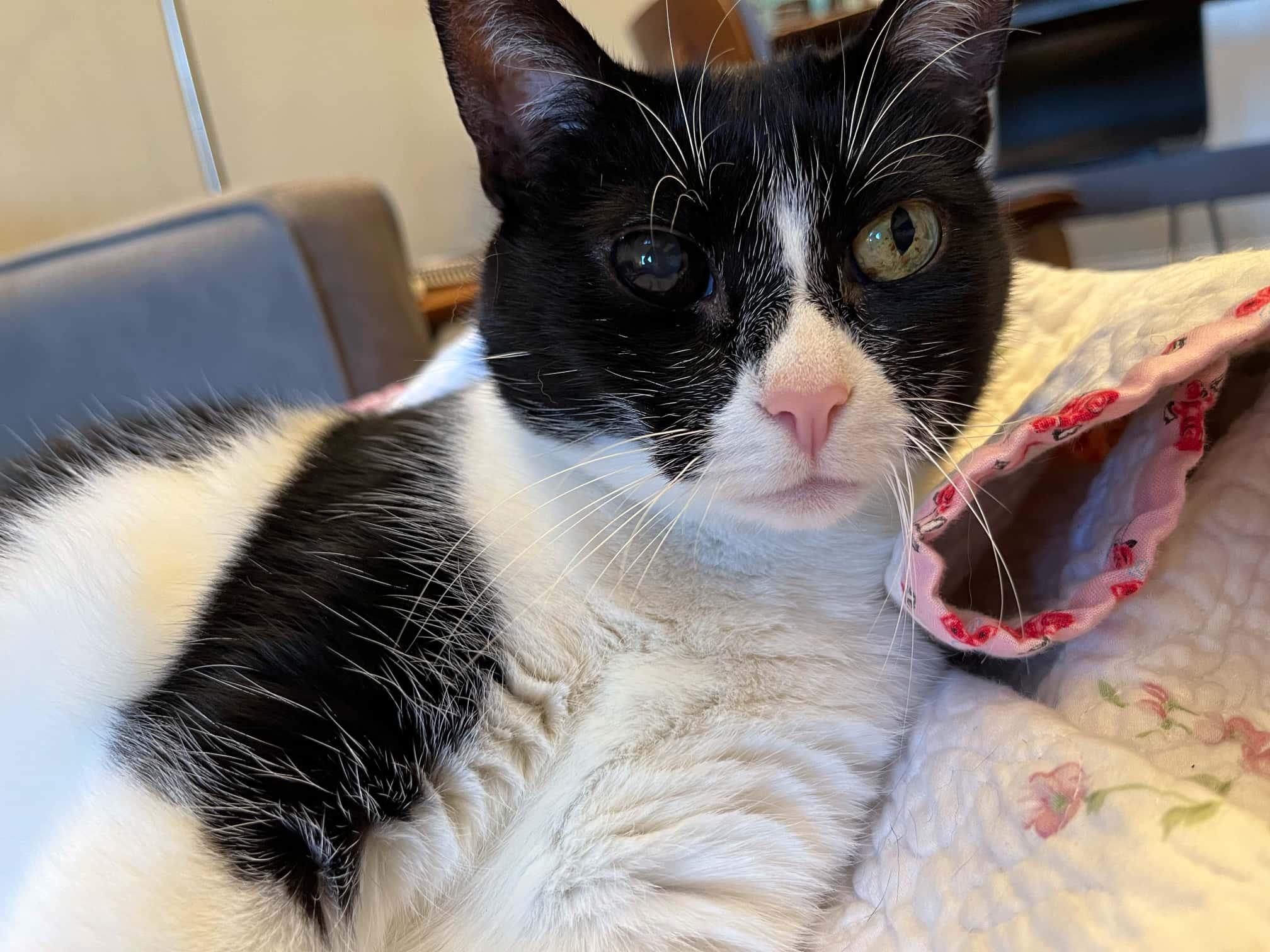
Apricot
We lost Apricot in early 2022. Her heart was going fast, she was breathing heavy, and compassionate vets told me the surgery options were limited for a ~15-year-old cat. I sat holding her for her final moments. Apricot was the first pet I lost, beyond a childhood cat who died while I was away from home. I know she’s not suffering now, but it was a heavy experience.
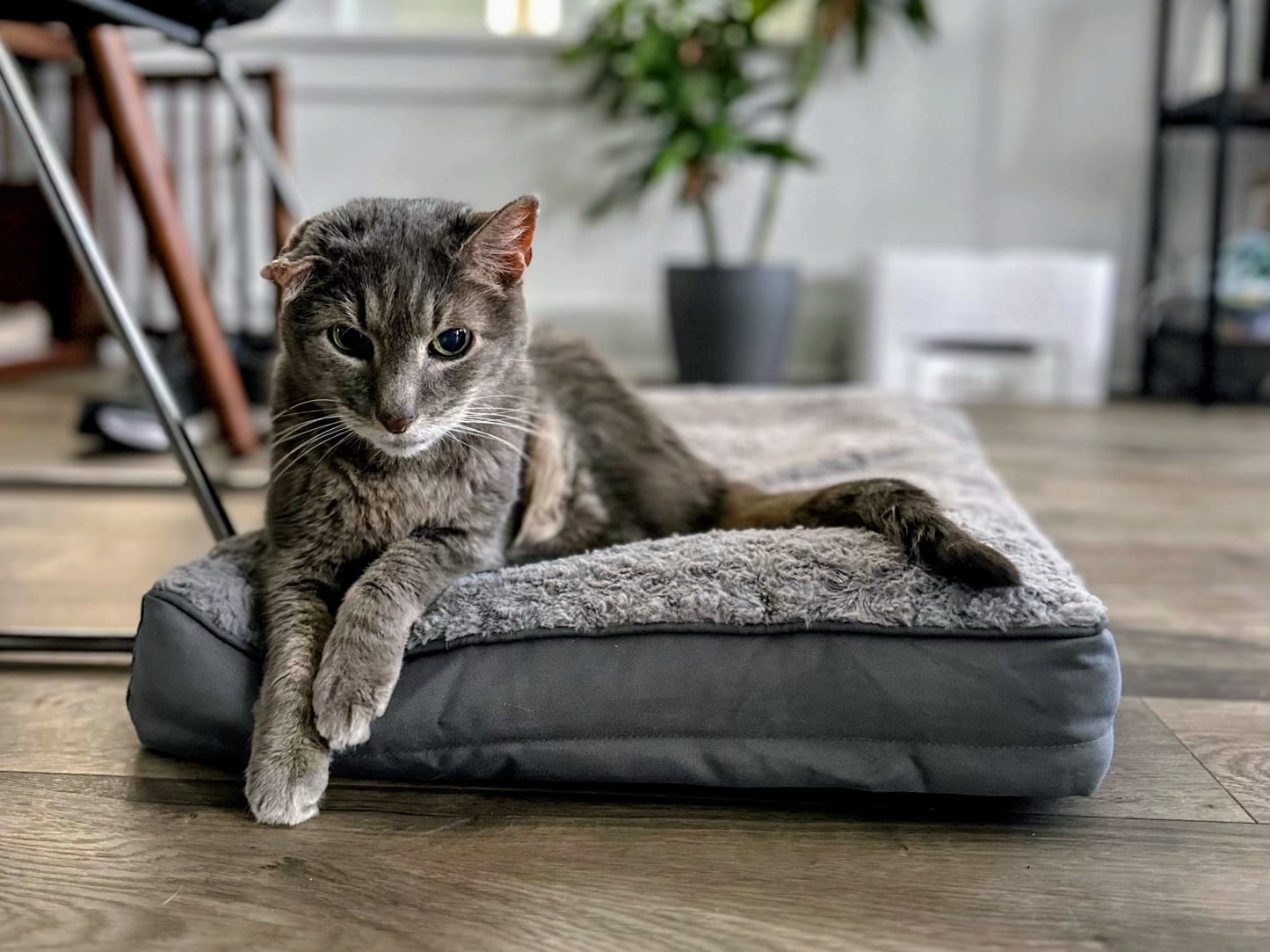
Cork
Cork is 19 years old as I write this. His right ear is messed up from when it bruised and ballooned up and needed surgery. He’s real skinny, and he’s got the earlier stages of kidney disease, the kind that eventually comes for all domesticated cats. But he still loves laps, and is pretty clever and spry, considering all that.
Howard
14 years old (we think). What a goof.
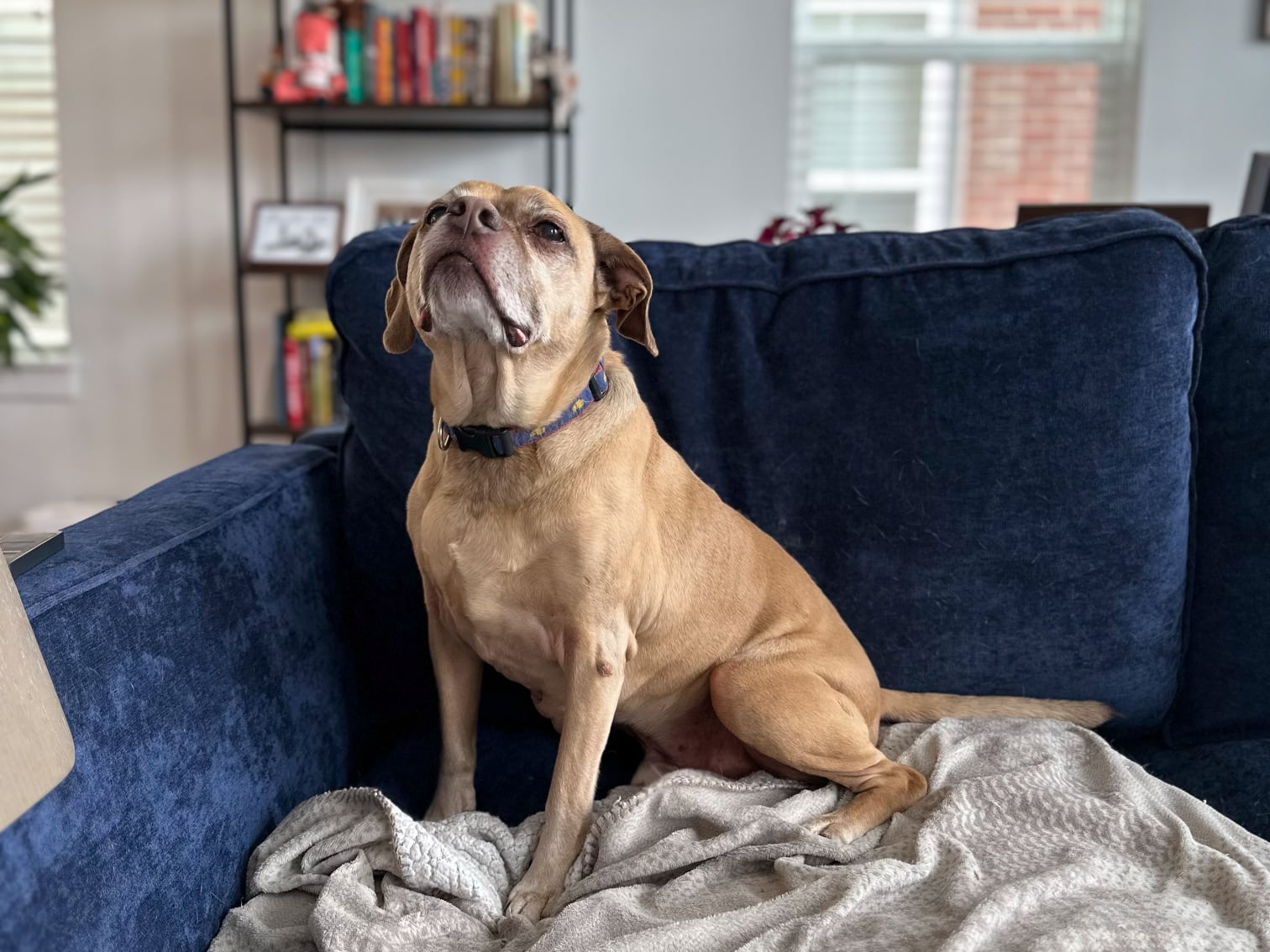 Photo credit for Cork and Howard: Chaz Adams